CONDÉ NAST DESIGN SYSTEM
⟡⟡⟡⟡⟡
Condé Nast is a global media company that produces some of the world’s leading print brands including Vogue, GQ, The New Yorker, Vanity Fair, Wired, Architectural Digest, Condé Nast Traveler, and more.
With such a wide variety of publications, it was becoming increasingly difficult to manage 23+ different branded websites that fell under the Condé Nast umbrella. The digital team worked on defining a clear strategy for how to maintain design assets for so many different brands, which resulted in an incredibly flexible design system.
Verso is Condé Nast’s initiative to build software more efficiently, faster, and with better ability to measure performance while still honoring our brands’ unique visual identities. It is a unified application that enables us to quickly create consumer-facing experiences that are easily shared among all of our brands. This new multi-tenant server architecture consists of a design system - including a pattern library and brand identity system, as well as a robust customization layer.
CLIENT: CONDÉ NAST
AGENCY: CONDÉ NAST
TASK: UI, UX
DATE OF WORK: 2018
CLIENT: CONDÉ NAST
AGENCY: CONDÉ NAST
TASK: UI, UX
DATE OF WORK: 2018
PRODUCT DOCUMENTATION
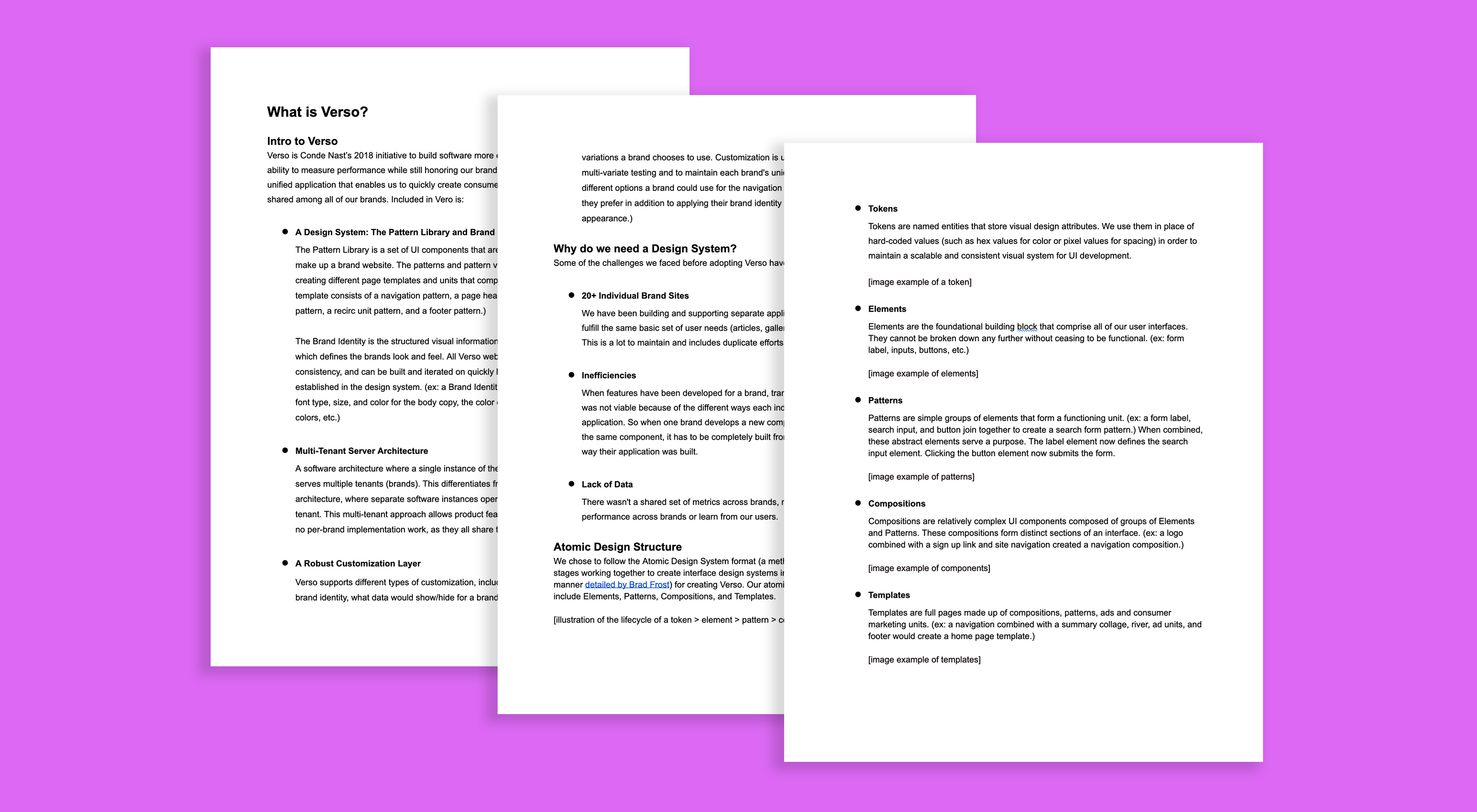
As our design system is incredibly complex to meet the needs of over 23+ brands on a single set of patterns, so we required extensive documentation to capture the capacity at which we work. I documented our design system process to explain what it is, why we need it, what it’s composed of, and how to use it. This was essential when on boarding new team members not only to design, but also to product and engineering.
PROCESS EVALUATION
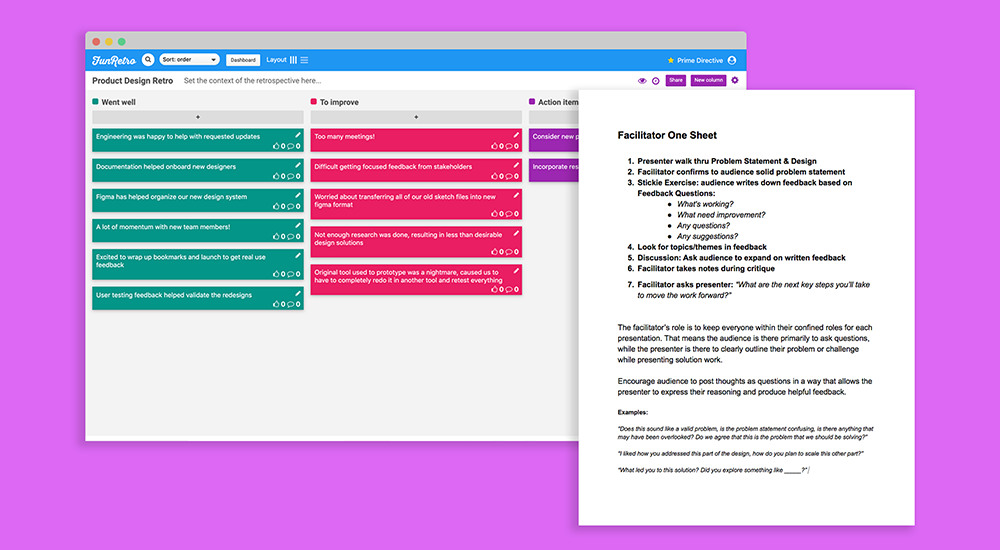
As our company shifted its organization, I took this as an opportunity to establish a set process and team culture. This included analyzing our current rituals like retros and critiques, and reassessing how we use them. I came up with alternate tools which accomplished the job better, and established a universal set of rules for each team to follow when hosting these meetings. This way we were using our time at maximum capacity and getting the most out of our meetings.
EFFICIENCY & ORGANIZATION
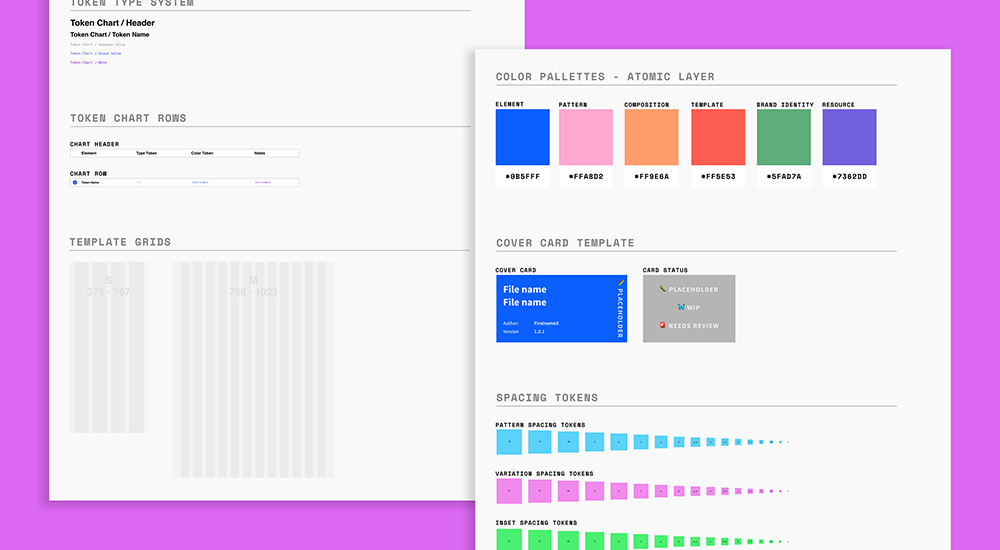
When joining a team of 12+ designers, it was important to make sure everyone was on the same page and working cohesively. I worked to implement a single file structure where all files used the same symboled pattern templates to ensure consistency across all teams. This helped the design team work faster by being able to focus on the designs themselves instead of the design structure and organization. I created a shared team library which included a standard taxonomy all members could work from, helping the teams work together and faster.
UTILITY PATTERNS
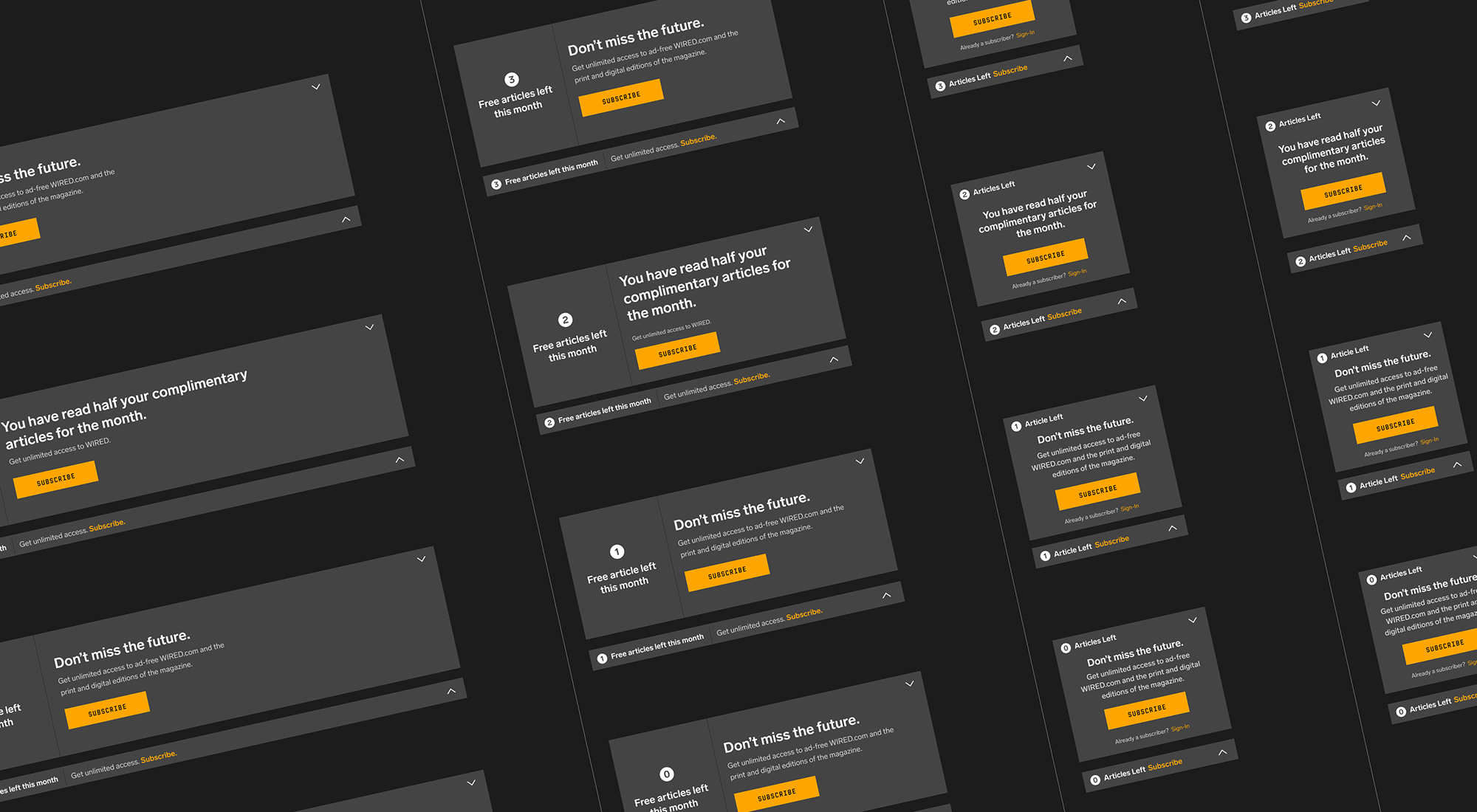
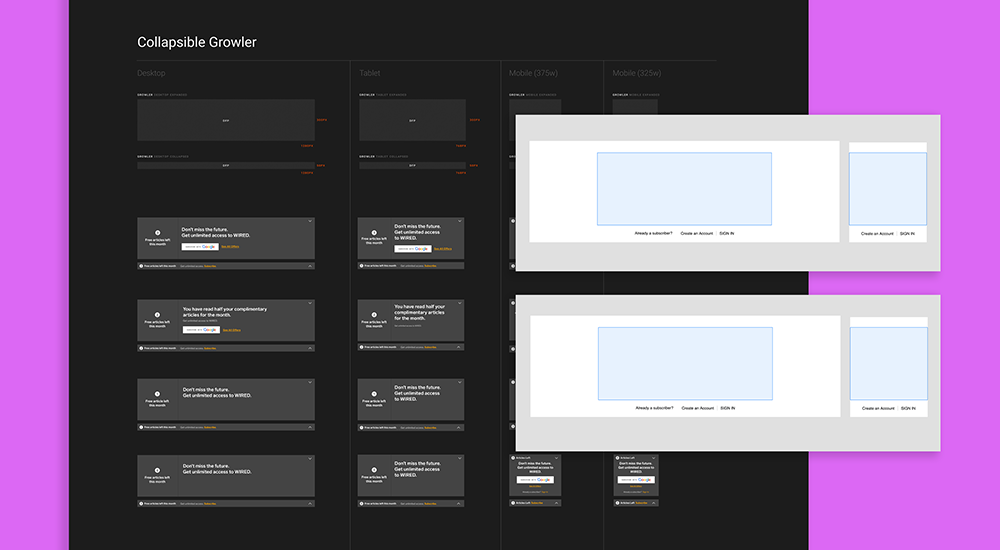
Ownership of all Utility patterns and Interactive Elements including button systems, account management, subscription process, profile pages, paywalls, and more.